
Buying guide · 5 min read
Used RV buying guide: roof, moisture and propane
Before we inspect an RV, we ask about past leaks, roof maintenance and the utilities available at the seller. Those details help me look in the right places and record which systems can be demonstrated.

Updated Nov 2026
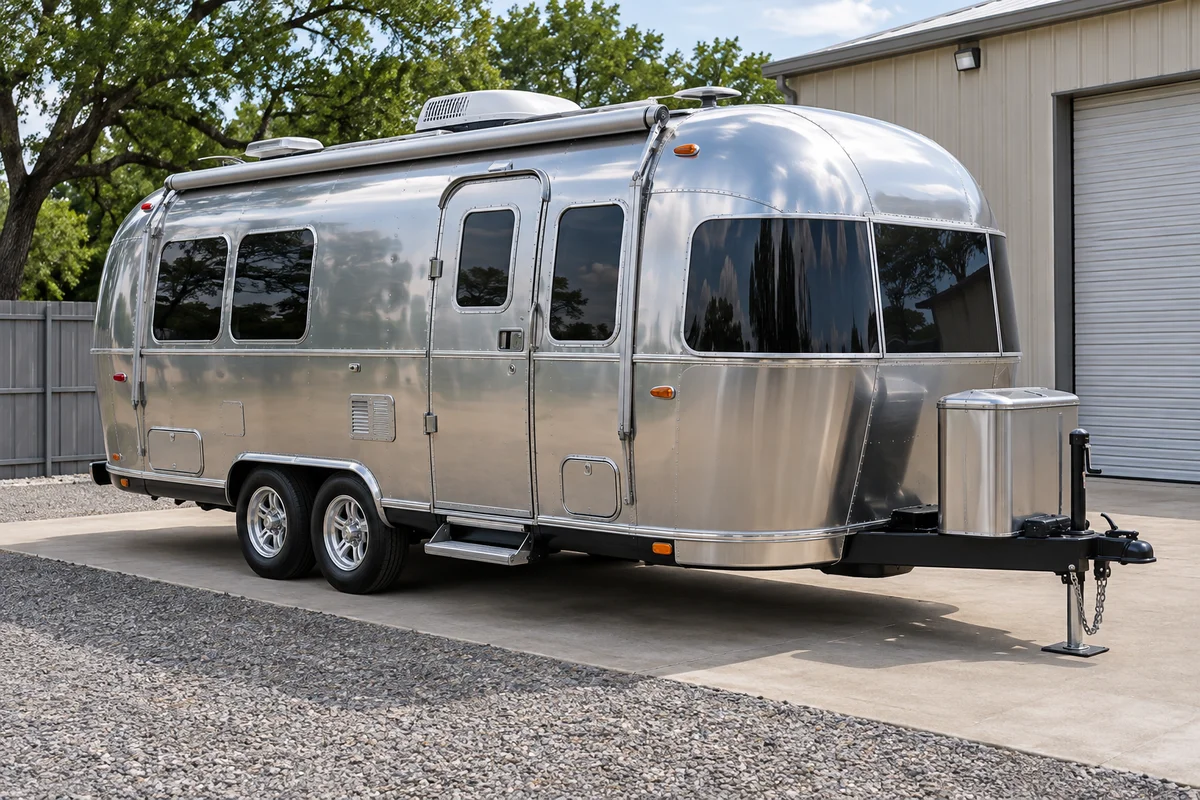
Roof seams and the sealant around openings
Living and traveling full-time in an Airstream keeps roof maintenance on my mind. We ask when the seller last checked the seams and resealed the vents, A/C units and skylights. We look for gaps, lifting edges, cracks, and areas where a new bead was applied over old material. One patched area may be ordinary maintenance. A patch next to a stain inside deserves a closer look.
Ask for dates, receipts and pictures. A photograph from before a repair can tell you where water was getting in and what was exposed. I also ask whether the roof construction permits access and whether there is a safe way to reach it.
Soft floors near the door, bathroom and slides
I start in places where water regularly shows up. At the entry, we check the floor beside the door and step. In the bathroom, we check around the toilet, shower and vanity. At slide-outs, we look near the corners and inside adjacent cabinets. If the floor feels soft, I note the location and check for nearby stains, swollen trim and signs of previous repairs.
Check whether new flooring stops abruptly around a cabinet or changes height near an opening. Ask when and why it was installed. If the floor flexes or sinks under normal walking pressure, find out how much of the subfloor is affected before you settle on a price.
Stains, wall bubbles and delamination
We look at ceilings, window corners, walls inside cabinets and the front and rear caps. A dried stain can be evidence of an old leak. A stain alongside a soft area or musty smell calls for more attention. On laminated walls, rippling or separation can indicate a bond has failed; the cause and extent need more evidence.
Look along the wall in angled light. Photograph where the ripple or stain begins and ends. Ask the seller if it has grown, whether the leak was traced, and whether a repair shop documented what it found. A dry surface today tells you the condition at that moment. Photographs and records help establish what happened earlier.
What a moisture-meter reading can tell you
We use comparative readings where the surface and access allow it. A higher reading near a window means more when compared with a dry-looking area of similar construction. Metal backing, foil, fasteners and different materials can influence the reading. A meter can point me toward a closer look; it can’t show how far moisture traveled behind a wall or whether hidden material is damaged.
If an area reads higher, we compare the reading with visible conditions and ask about leak history. If the surrounding material is soft or visibly separated, I’d ask an RV repair shop for a closer evaluation before buying.
Slide-out seals and toppers
With permission and room to operate the slide, I watch how it moves and sits in the opening. We look at the rubber seals around the top and sides, the corners where water can collect, and the underside and accessible floor edges. A topper can help divert debris and rain, and its fabric and mounting deserve a look too.
Ask the seller to show that the slide can go out and back in with the rig set up properly. When it’s retracted, check for daylight or an uneven gap. If it hesitates or stops moving, have the seller explain the history and get it checked before repeatedly operating it.
Propane tanks, the regulator and the LP detector
We look at accessible tanks or cylinders, mounting, hoses and the regulator. For portable cylinders, we check the certification marking where applicable. I also check whether the fitted LP detector operates using its test function and record any visible concerns. The detector’s test button checks the alarm function. A suspected leak needs a qualified technician.
Ask if the seller knows of any propane odors, appliance shutdowns or regulator replacements. If you smell propane or suspect a leak, leave the area and have the system investigated before operating appliances.
Ask the seller to have utilities ready
Before the appointment, ask for an appropriate shore power connection, a water source or water in the fresh tank, and propane where the rig has propane appliances. Ask which modes the refrigerator, water heater and furnace use. I also check fitted systems such as A/C, outlets, lights, faucets, toilet, pumps and the generator as the setup allows. For the fridge, ask the seller to start it early enough to demonstrate cooling and note which mode they selected.
Confirm that the property has room for the slides and awning and that the keys for storage compartments are available. If the RV is winterized, tell me ahead of time so I can explain which plumbing checks will be limited.
Book an RV inspection
We come to the seller and send a photo report. RV inspection is $499 for travel trailers, fifth wheels, truck campers, camper vans, and Class B and C motorhomes. Class A motorhomes are $999. We check the living systems and the relevant motorhome chassis or trailer running gear. See RV inspection prices and scope before you book.
RV inspection prices and scopeCompare inspections and pricesCheck the service area