
Buying guide · 3 min read
What a pre-purchase inspection can tell you about a hybrid or EV
A hybrid or electric vehicle still needs a careful look before purchase. It also raises questions about charging, warning messages and the high-voltage battery that deserve precise answers. The useful approach is to distinguish documented observations from information a general pre-purchase inspection cannot certify.
Updated Nov 2026
Start with the whole vehicle
Do not let the powertrain distract from exterior condition, interior equipment, tires, wheels and visible repair evidence. My inspection records accessible components and individual tire and wheel findings. Tire brand, size and tread depth are included where accessible.
Most hybrids and EVs use my $299 Modern inspection. Qualifying luxury, performance and exotic models are $349. The booking form uses the year, make and model.
Ask about charging and warning messages
Ask the seller what charging equipment is included, whether the vehicle has displayed charging errors or warning messages, and whether service records are available. If a charging observation is important, discuss available access and equipment before the appointment.
My checks include accessible systems, charging observations and supported diagnostics where available. A single successful charging observation describes that event; it does not establish compatibility with every charger or resolve every intermittent concern.
What we found on a 2023 Tesla Model 3
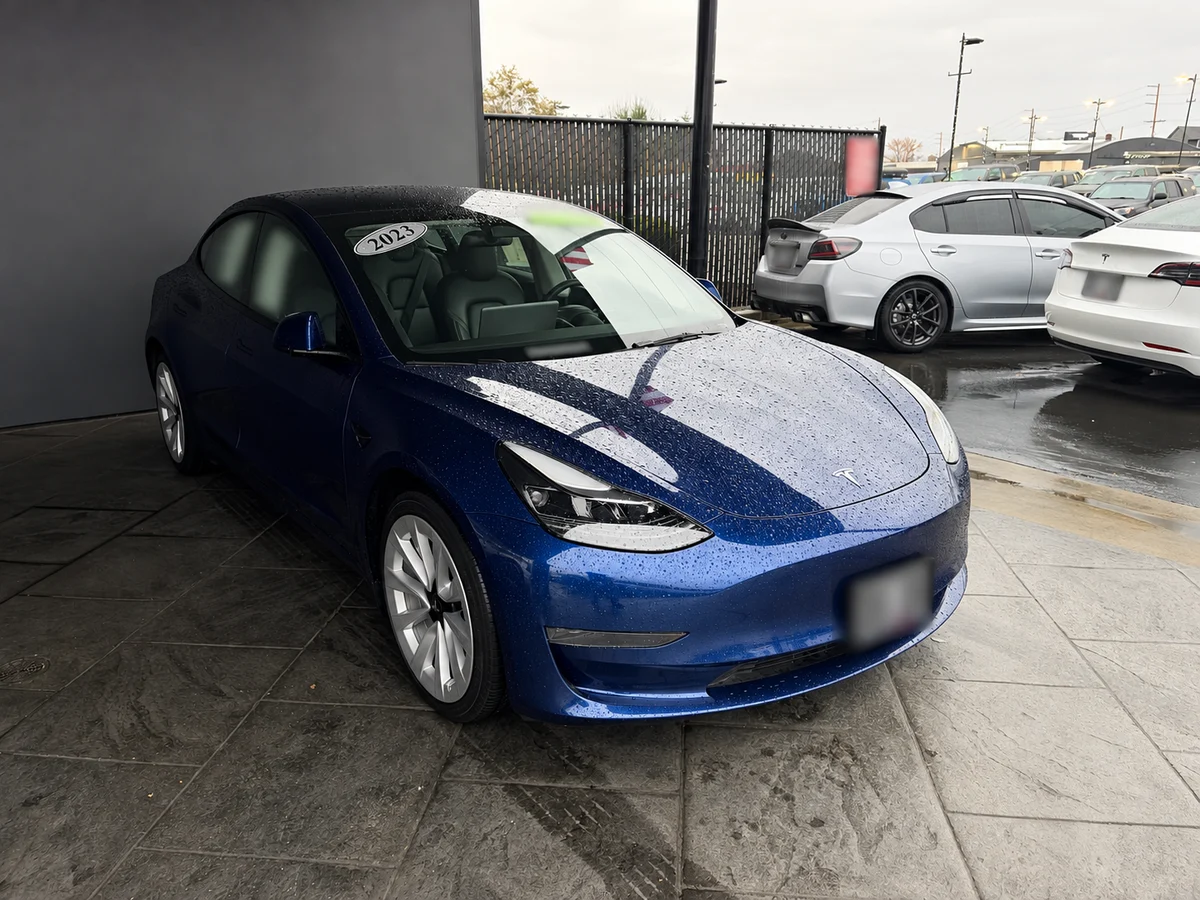
The Bellingham Model 3 had no portable charger. The diagnostic scan returned no faults in the systems checked. I measured thicker paint on several panels, including both rear doors, which suggests possible paint work. I saw no visible evidence of it. See my Tesla inspection page for the photos and more findings.
Understand the battery-health boundary
My inspection does not certify high-voltage battery capacity or battery health. A dashboard range estimate, the absence of warning lights, or a brief road test should not be read as a capacity certificate. Battery questions may require manufacturer-specific information or a separate specialist assessment.
Ask the seller for relevant battery service or diagnostic records. Confirm any remaining warranty directly with the manufacturer using the vehicle’s details. Coverage and transfer conditions are vehicle-specific; a listing’s warranty statement should not be your only source.
Use the report to identify follow-up questions
Read supported diagnostic findings and visible observations alongside the rest of the report. If a concern could change your purchase decision, resolve it with suitable documentation or further assessment before committing. A report can point to a question without establishing its complete cause or repair cost.
The U.S. Department of Energy’s Alternative Fuels Data Center provides background on EV maintenance and batteries. Use general guidance to prepare questions, while relying on vehicle-specific evidence for the car you are actually buying.
Arrange a mobile inspection at the seller’s location
We come to the dealer or private seller anywhere in the United States. Include the full address, a reachable contact and any charging or warning-message concerns in your order. A road test is done when safe and permitted.
We text and email a secure link to the photographs, written findings and any uploaded videos. Log in with your phone number or email to view your report. The inspection is a hands-on, non-invasive condition assessment at the time of the appointment, not a guarantee of future performance.