Road tests are done when safe and permitted.
Model 3 and Model Y: start with the chassis
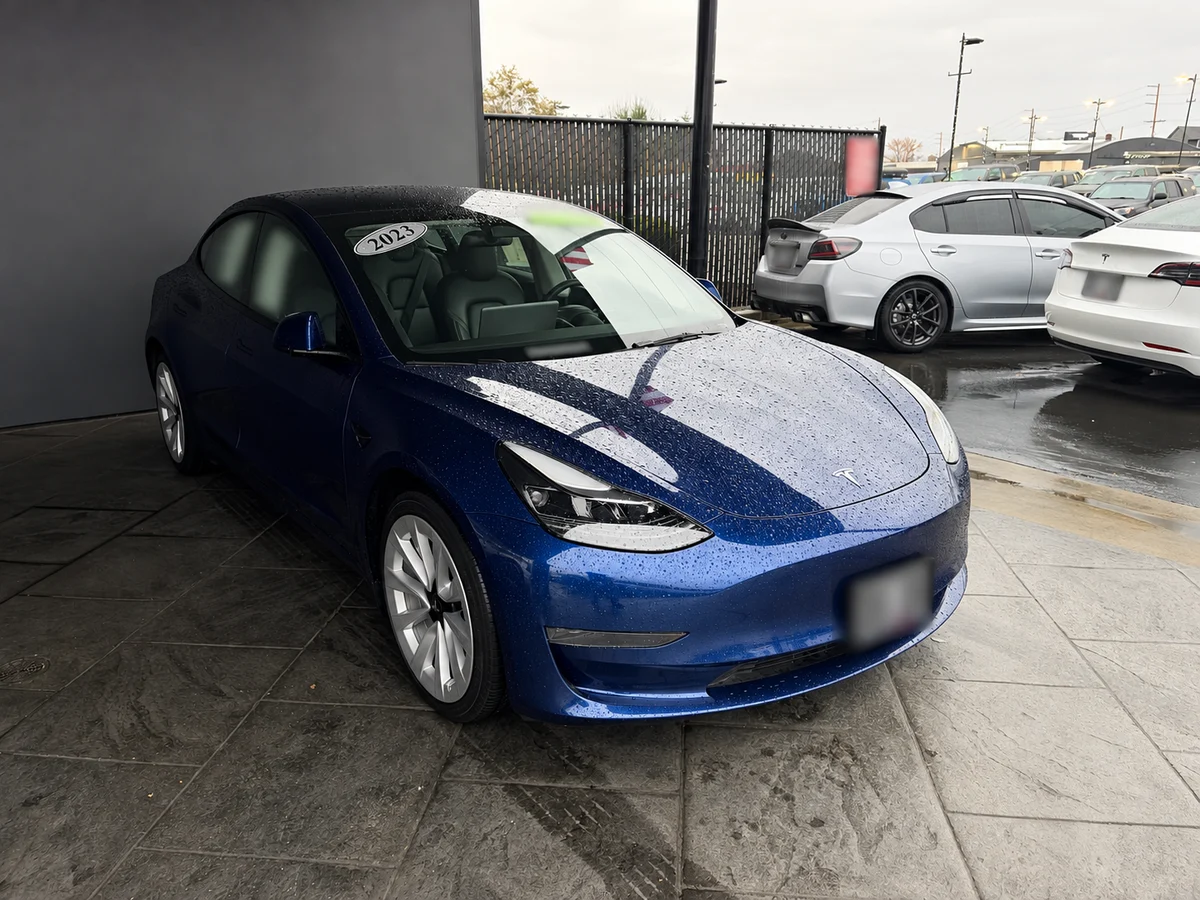
We inspect a Model 3 or Model Y as a complete vehicle, not simply a screen showing remaining range. We compare tire wear across the tread, inspect accessible suspension components and listen for knocks over pavement transitions.
Tesla has published recall information for particular vehicles and components, so we ask the seller to check the VIN through Tesla’s recall system. That does not make every noise a recall fault.
During a safe, permitted drive, we describe the speed and conditions of any vibration, pulling or clunk. Photographs and a reproducible symptom are more useful to you than a guessed control-arm diagnosis based only on a model’s reputation.
Model S and Model X equipment changes
An early Model S and a later refresh have different hardware and features. We identify the installed equipment before testing door handles, air suspension where fitted, seats, climate controls and displays.
On a Model X, we check the powered doors in the space available and note interruptions, warnings or visible seal damage. We look at the vehicle’s stance before and after any permitted suspension adjustment.
An air-suspension warning needs follow-up even if the car currently sits level. We do not infer the health of an air spring or compressor from a single photograph, and we do not claim that every Model S or Model X has the same suspension configuration.
Battery case, charging and what range cannot prove
We look at accessible battery-case edges and underbody protection for impact evidence without opening the high-voltage system or removing sealed components. Where the seller can safely demonstrate charging, we record what was connected and what the car displayed.
A working charge port at one location does not prove that every charging mode will work elsewhere. Displayed range depends on settings, state of charge and other conditions; it is not a measured battery-capacity result.
We do not promise a degradation percentage from the dashboard. If a capacity concern drives your purchase decision, we recommend obtaining the appropriate specialist test and any manufacturer battery or warranty information before buying.
Body materials and previous repairs
We compare compatible panels, panel alignment, fasteners, glass and visible repair transitions. A panel gap by itself is not proof of collision damage.
Equally, a clean history report does not establish that every panel has original paint. I photograph the evidence and explain whether a reading is absent, unsuitable for the surface or inconsistent with adjacent panels.
We also check visible underbody shields and jacking areas, because a car can have a tidy exterior while carrying damage underneath that an ordinary listing photograph will not show.
Cameras, screens and diagnostic limits
We operate the touchscreen, cameras, lights, windows, locks and climate controls that the seller makes available. I note active warnings and supported diagnostic access rather than promising the same scan coverage as every gasoline car.
Driver-assistance availability can depend on hardware, account status and the vehicle’s configuration. We do not certify an advertised paid feature or a future software capability by reading the seller’s listing.
Ask the seller to demonstrate the purchased features and provide the relevant account or vehicle documentation. We can document the controls and warnings present during the visit, but we cannot guarantee a feature transfer that depends on Tesla’s terms or an ownership-account process.
Used-EV records before a long-distance purchase
We ask for service invoices, repair history, charging-equipment details and warranty information for the exact Tesla you are considering. A buyer in another state can use our photos and call to decide which questions need an answer before arranging transport.
We do not assume that a low-mileage Model Y has avoided curb impacts or that a high-mileage Model 3 has a poor battery. The report separates observed mechanical and cosmetic condition from information supplied by the seller.
If charging cannot be demonstrated or a protected underside area is inaccessible, I say so plainly. That lets you arrange a targeted follow-up instead of treating an unperformed test as a passing result.