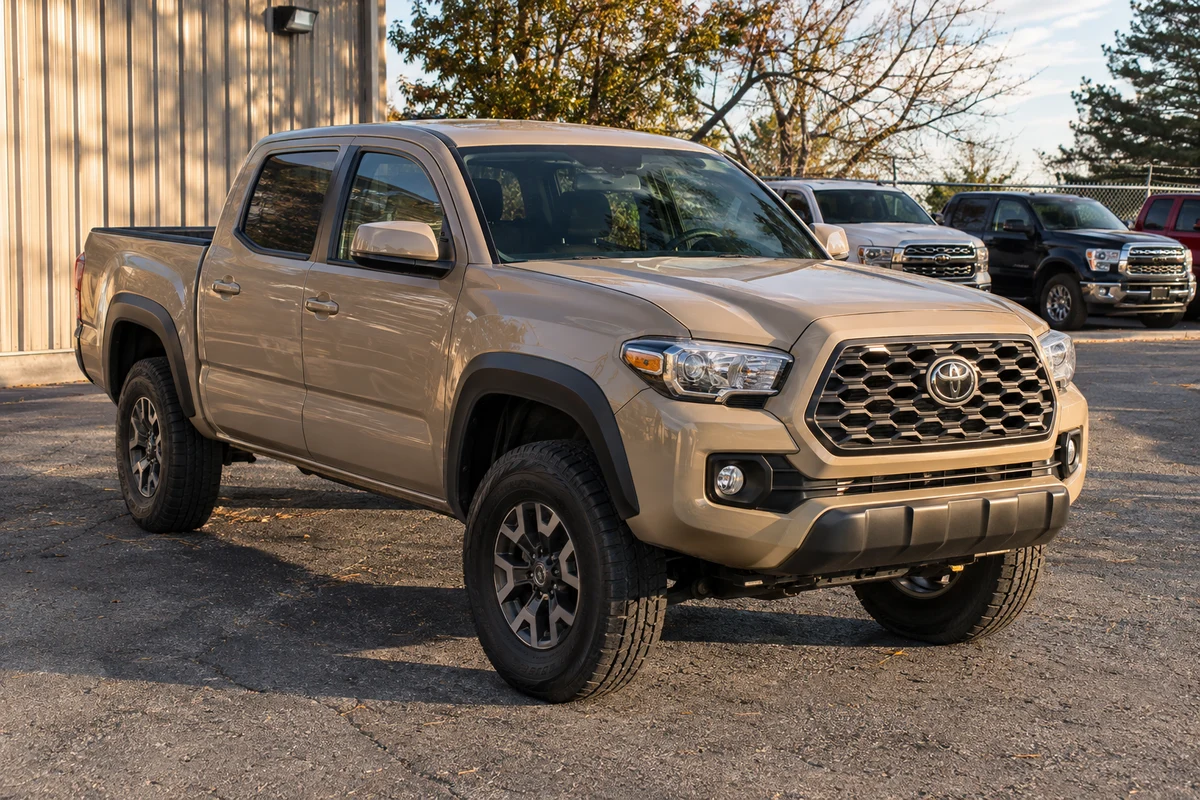
Road tests are done when safe and permitted.
Tacoma generations and the frame underneath
I distinguish a 1995–2004 Tacoma, a 2005–2015 truck, a 2016–2023 truck and the redesigned 2024-and-newer generation before discussing known issues. Toyota’s frame-corrosion campaign information specifically identifies certain older applications, including 2005–2010 Tacomas; it is not evidence that every Toyota truck has a frame defect.
I photograph accessible rails, crossmembers, suspension mounts and the areas where dirt collects. Fresh black coating needs context: We look at its edges and any exposed scaling rather than accepting “rustproofed” as a condition rating.
We do not strike the frame, drill into it or certify hidden metal thickness during a non-invasive mobile inspection.
Leaf springs on Tacomas, coils on 4Runners
A Tacoma’s rear leaf-spring pack gets a close visual check for fractured leaves, shifted components and corrosion. Toyota recalled certain 2005–2011 Tacoma PreRunner and 4x4 vehicles for a leaf-spring concern, so we ask for VIN-specific completion evidence when applicable.
We do not apply that leaf-spring description to a coil-sprung 4Runner or every newer Tacoma configuration. On a 4Runner, we inspect accessible rear links, springs and shock mounts instead.
We compare ride height side to side and look for leakage or damaged bushings. Cargo loads and aftermarket equipment can change the stance, which is why the photograph and the actual suspension configuration belong together in the report.
4WD engagement and axle behavior
We identify the truck’s transfer-case controls and follow the appropriate operating conditions before attempting a 4WD check. A part-time system should not be bound up on dry pavement just to demonstrate that a switch moves.
We look for warning indicators, delayed engagement, actuator noises and leakage around the transfer case and differentials. A permitted road test helps us listen for bearing noise, vibration and driveline clunks, but access and surface conditions may limit the available modes.
I state those limits. If a seller says the system only needs to be exercised, that remains a seller explanation until the vehicle actually demonstrates normal engagement under suitable conditions.
Lifts, large tires and underbody impacts
A lifted Tacoma or 4Runner can look appealing while concealing a poor combination of parts. I note visible spacer lifts, control arms, shocks, altered sway-bar links and oversized tires.
We look for rubbing, stretched hoses, unusual joint angles, loose-looking hardware and uneven tire wear. We do not certify a lift’s engineering or alignment from appearance.
The skid plates, differential housings, exhaust and accessible frame seams can tell a more useful story than a clean hood. Dents and scraping are documented by location, so you can distinguish cosmetic trail contact from damage near a mount.
We ask for installation and alignment invoices rather than relying on a claimed lift height.
4Runner engines, age and cabin evidence
Third-generation 4Runners from 1996–2002 need an age-focused review of cooling hoses, leakage, frame condition and rubber components. Fourth-generation 2003–2009 trucks may have a V6 or V8, which changes the maintenance questions; the V8 uses a timing belt.
Fifth-generation 2010–2024 models still deserve careful suspension, cooling and underbody checks despite their reputation for longevity. We do not use that reputation as a substitute for condition evidence.
We test the rear window, locks, climate system and fitted 4WD controls, and look for damp carpeting or silt around accessible interior seams. A clean cabin alone cannot establish that a truck has never been flooded.
Towing and purchase records
We ask whether the truck has towed, what hitch equipment was installed and whether service records identify differential and transfer-case maintenance. On a Tacoma with a bed rack or camper equipment, we look at visible bed attachment areas and how the added load affects the stance.
On a 4Runner, we check the cargo floor, hatch operation and spare-tire area where accessible. We describe observed condition rather than calculating an unverified towing capacity from an advertisement.
Before you commit, compare the exact VIN, configuration and manufacturer labels with the intended use. We can show you wear and warning signs; we cannot promise that an unseen internal component will never fail.