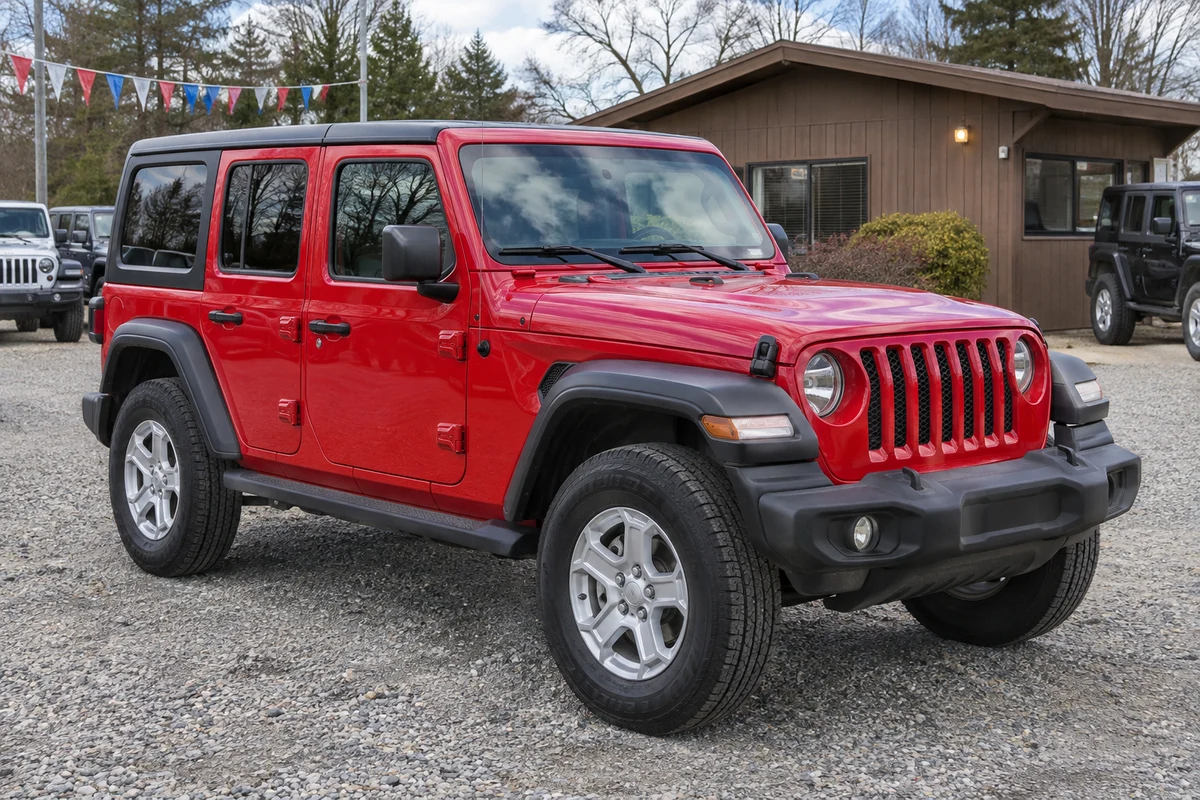
Road tests are done when safe and permitted.
JK and JL: the 2018 overlap matters
We identify the Wrangler generation before applying a list of common concerns. JK covers 2007–2018 and JL begins in 2018, so a 2018 advertisement needs more than the model year to identify the platform.
We compare the vehicle details, engine and fitted controls with the listing. An early JK with a 3.8-liter engine is not the same mechanical inspection as a later 3.6-liter JK, a turbocharged JL or a 4xe plug-in hybrid.
We ask for service and modification invoices matched to the vehicle. The report describes the equipment We can verify rather than assuming that a trim badge or aftermarket decal establishes which axles, gearing or suspension parts are installed.
Steering wear, wobble and front-end evidence
We check accessible steering links, track-bar areas, ball joints, bushings and mounting points for visible concerns, then assess steering feel during a safe permitted drive. A Wrangler that shakes after a bump may have several contributing issues; a steering damper by itself is not proof that the underlying cause has been corrected.
We do not intentionally provoke a dangerous wobble. We describe any looseness, vibration or pulling with the conditions in which we observed it, and explain when a shop-level evaluation is needed.
Tire condition and visible lift hardware belong in the same assessment because they can change how a Wrangler behaves on the road. A short restricted drive cannot certify highway behavior.
Axles, transfer case and underbody use
We identify the available 4WD modes and follow suitable operating conditions instead of binding a part-time system on dry pavement. We check accessible axle housings, differential areas and transfer-case seams for leakage and impacts, and photograph the skid plates and frame where visible.
Scraped protection can be ordinary evidence of trail use, while a damaged mount, bent bracket or heavy corrosion needs a more specific note. We ask about towing, recovery use and any axle or gearing changes.
We do not verify an internal gear ratio by looking at the cover. If a mode cannot be safely demonstrated at the seller’s location, the report records that limitation rather than treating it as a completed test.
Lifts and modification combinations
We document visible spring or spacer lifts, control arms, aftermarket wheels, larger tires, bumpers, winches and added lighting. The important question is how the combination is fitted and behaving, not simply whether the parts have a recognizable brand.
We look for rubbing, strained hoses, wiring without obvious protection and hardware that deserves closer attention. We ask for installation and alignment invoices and any removed factory parts.
My inspection does not certify a modification’s engineering or legality. A Wrangler can photograph well and still need a specialist to address steering geometry, component interference or load concerns.
Those limits are explained alongside the photographs so you can make an informed buying decision.
Hardtops, soft tops and water entry
We inspect the top actually fitted to the Wrangler, including visible seals, panel joints, latches, zippers or fabric condition as applicable. We look for damp carpeting, staining, corrosion around accessible cabin hardware and signs that water has collected under removable trim.
A dry appointment does not prove a roof will remain dry in a storm, and we do not perform a destructive water test. We operate doors, windows, locks and available roof hardware within the seller’s permission.
I also note missing pieces or poorly fitted aftermarket accessories. A clean detail job can hide the smell of a wet cabin temporarily, which is why the accessible physical evidence matters more than an advertisement saying “never leaks.”
4xe systems and recall restrictions
A 4xe adds plug-in charging, high-voltage equipment and hybrid operating modes to the Wrangler inspection plan. We check accessible charging components, supported warnings and available diagnostic information without opening the battery or measuring its capacity.
Certain Wrangler 4xe applications have manufacturer battery recalls, so we ask for the exact VIN and current completion information. I follow the manufacturer’s applicable restrictions; we do not request a charging demonstration where an unrepaired recall advises against charging.
A warning-free dashboard does not replace recall documentation. I separate what we observed during the visit from what requires confirmation through Jeep, and we explain any test that could not be performed safely before you decide whether to proceed.