Road tests are done when safe and permitted.
Grand Cherokee generations and equipment
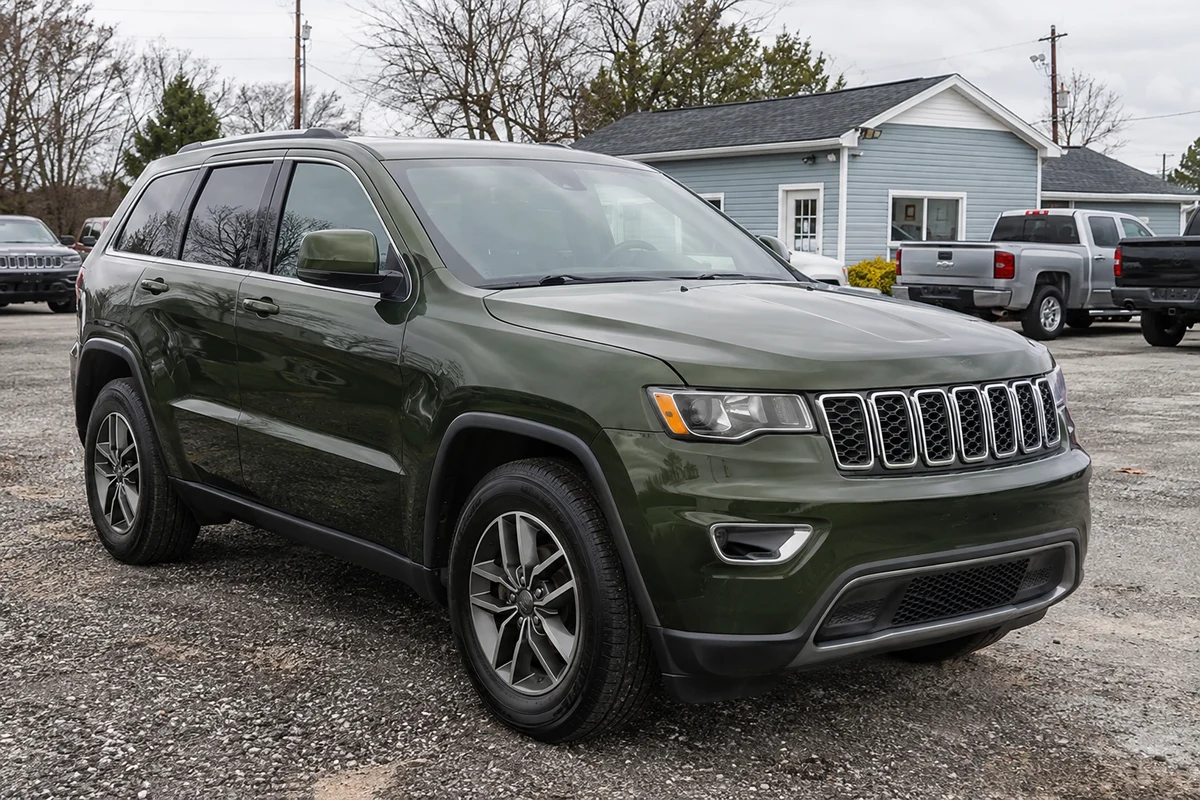
I distinguish the 2011–2021 WK2 Grand Cherokee from the newer WL family and identify the engine, drivetrain and fitted suspension. Air suspension changes the inspection plan: We check the stance, accessible controls, warning messages and any permitted height adjustment.
We do not prove overnight leak performance during a brief appointment. We look for accessible oil and coolant leakage and compare the service record with the actual engine.
A Grand Cherokee with a V6 is not assessed by assuming it shares every V8 concern. We ask for VIN-specific recall completion and describe current observations separately from known model history, especially when a seller says all updates have already been done.
Cherokee KL and nine-speed transmission behavior
The Cherokee name spans very different vehicles. On a 2014-and-newer KL with a nine-speed automatic, we check Drive and Reverse engagement, low-speed response and shifts after warm-up when the road-test conditions allow.
Manufacturer service information for some early KL applications addressed shift-quality concerns, but a model year alone does not diagnose the car in front of me. We record hesitation, harsh shifts or warning messages with the conditions in which they occur.
We ask for software and transmission repair invoices, because “updated” may refer to several unrelated services. Supported computer information helps put symptoms in context; it does not replace observing the vehicle operate.
Compass generations and AWD configuration
A 2007–2016 Compass and the redesigned 2017-and-newer model are different platforms, and some 2017 listings require extra care to identify the exact version. We verify the installed transmission and AWD equipment before describing what was tested.
We look for leaks, uneven tire wear, suspension noises and warning messages. We operate accessible cabin controls and check for water staining around roof and hatch areas.
A small crossover should not be evaluated as if it had a Wrangler’s solid-axle layout or transfer-case controls. The report names the actual system and any limits on testing it, so you can compare the seller’s description with the vehicle that was inspected.
Gladiator steering, bed and modifications
A 2020-and-newer Gladiator shares off-road interests with Wrangler buyers, but its pickup bed, longer chassis and cargo use deserve their own attention. We inspect accessible frame and suspension areas, look for bed and hitch damage, and document visible lift components, oversized tires and altered wiring.
On the drive we watch for steering play, vibration and unusual movement without deliberately provoking a dangerous shake. We compare the visible hardware with any installation invoices.
A lifted truck can need additional alignment or specialist evaluation even if it looks tidy. We do not certify a modification’s design, towing capacity or legal suitability from its appearance during a mobile visit.
4WD, water evidence and underbody condition
We identify the Jeep’s drive modes and use suitable operating conditions before checking available engagement. A switch lighting up is not the same evidence as a system operating correctly.
We look at accessible transfer-case and axle areas for leakage, and photograph underbody impacts, corroded mounts or damaged protection. Inside, we look for damp carpets, silt, staining and water marks around accessible trim.
We do not conclude that a Jeep has never been submerged just because the seats are clean. A recently detailed vehicle can still have useful clues below the floor or around electrical connectors that are visible without disassembly.
Any inaccessible area is identified in the report.
Choose the Jeep guide that fits the vehicle
This page covers Grand Cherokee, Cherokee, Gladiator and Compass. A Wrangler has a separate guide focused on JK and JL generations, removable tops, door seals, axle and steering wear and the 4xe system.
For the vehicles here, send the exact year, trim, drivetrain and any modification list when booking. We can then ask the seller for the appropriate keys, records and road-test permission.
My findings distinguish normal function, items needing attention and tests that could not be completed. After the visit We provide a photo report with plain-English findings so you can decide what to ask next, rather than relying on a general claim that every Jeep is ready for trails.