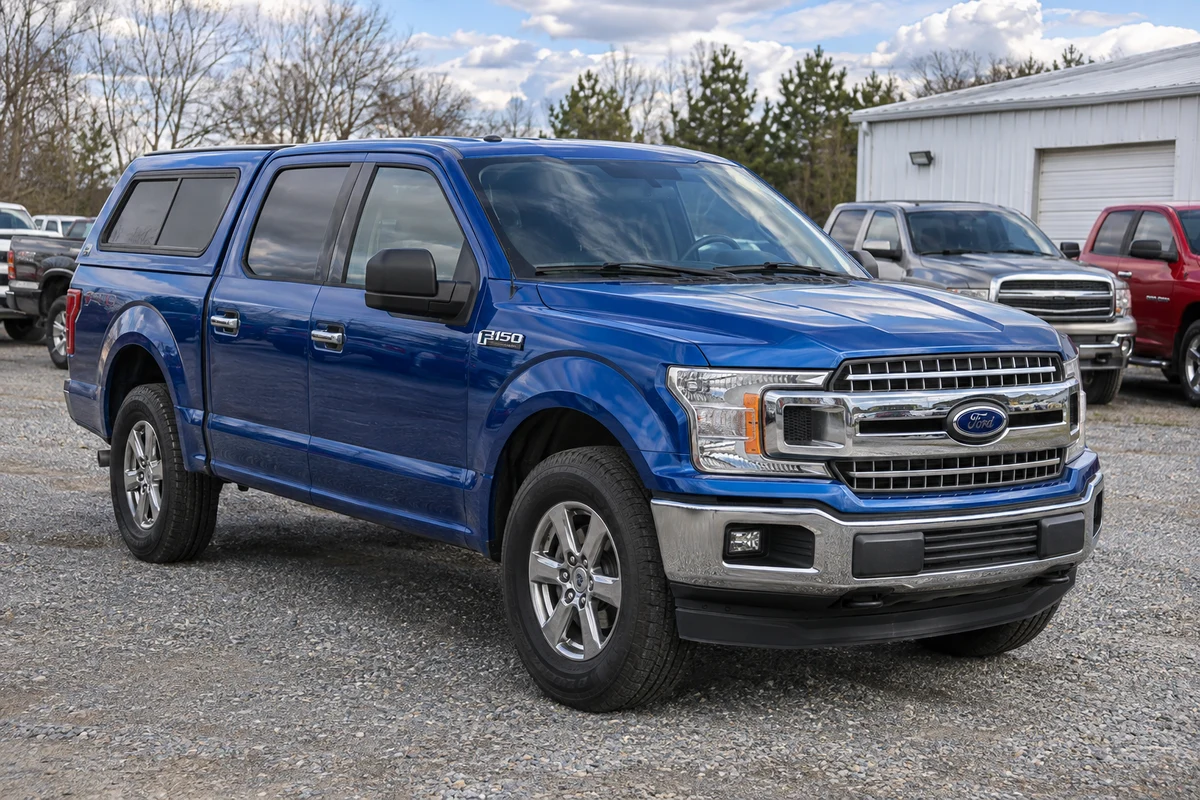
Road tests are done when safe and permitted.
Identify the F-150 generation and engine
I distinguish the 2004–2008, 2009–2014, 2015–2020 and 2021-and-newer F-150 generations, then identify the engine, transmission, drive system and installed equipment. An EcoBoost V6, a naturally aspirated V8 and a PowerBoost hybrid require different questions.
We look at accessible leaks, startup behavior and the service record relevant to that actual configuration. A seller’s claim that the common issues were fixed needs an invoice naming the work.
We do not assume the engine under the hood is original, or that a trim badge proves a particular towing package. If you plan to tow, compare the exact vehicle labels and manufacturer information with your load rather than relying on a broad advertisement.
3.5-liter EcoBoost startup concerns
Ford has published cam-phaser information for specified 2017–2020 F-150 applications with the 3.5-liter GTDI engine. That history is a reason to request a genuine cold start and service documentation; it does not diagnose every EcoBoost truck.
We ask the seller not to warm the engine before the appointment where practical, listen for unusual startup noise and record the conditions. If it is already warm, I say so.
We check accessible oil and coolant leakage and compare supported diagnostic information with drivability. A quiet warm engine cannot prove that a cold-start concern has been corrected.
We do not promise internal timing-component condition without the separate testing or disassembly that would require.
Six-speed and ten-speed transmission behavior
We identify which transmission the truck actually has before applying published service information. Ford bulletins describe harsh or delayed shifting on specified 10R80 applications; the same label should not be applied automatically to a truck with a different gearbox.
During a permitted drive We check engagement from Park, low-speed take-up, acceleration and shifts after warm-up. I note hesitation, shudder or abrupt changes with the circumstances in which they occur.
We ask for servicing and repair records and scan supported modules. We do not erase adaptive information or perform a relearn to make a pre-purchase drive feel better.
If road access is limited, we explain what that prevented us from checking.
Frame, bed and towing evidence
A pickup’s work history can show up underneath and around the bed even when the hood is clean. We inspect accessible frame rails, crossmembers, hitch areas, suspension mounts and bed attachments for corrosion, impacts or visible repairs.
We look at the bed floor, tailgate, wiring and any added brake-control or accessory equipment. A heavy hitch alone does not establish what the truck has towed or whether it stayed within its ratings.
We describe observed wear rather than inventing a load history. On a lifted truck I note the visible components, tire clearance and road behavior, and explain when an alignment or specialist modification assessment is needed before purchase.
Body materials, 4WD and cabin equipment
We do not turn a missing reading into a claim of original paint. We check panel fit, visible repair transitions and underbody protection alongside the measurements.
For 4WD We use suitable surfaces and operating conditions, not a dry-pavement demonstration that binds the system. We test the available cabin equipment, cameras, locks, windows and climate controls, and look for damp trim around roof or rear-window areas where fitted.
A truck with good acceleration can still have water-entry evidence or equipment faults worth knowing about.
Full-size trucks, hybrids and the buying decision
We also inspect Ram and Chevrolet Silverado full-size pickups, but their engine and transmission concerns are not interchangeable with Ford’s. This F-150 guide is written around the Ford configuration, including the different inspection questions a PowerBoost hybrid adds.
We check accessible hybrid information and supported warnings without opening high-voltage components or measuring battery capacity. My real Ford Fusion case study shows how I separate paint evidence and history codes from normal road-test behavior; it is a Ford example, not an invented F-150 job.
Send the exact truck details and intended use when ordering. We document the findings and questions to resolve before you commit in your photo report.