
Buying guide · 5 min read
Buying a Used Tesla in Washington: What I Check
I inspected a 2023 Tesla Model 3 at a Bellingham dealer with 31,506 miles. It drove normally, and the scan returned no faults in the systems checked. I still found questions worth asking before buying. Here’s how we check a used Tesla.
Updated Nov 2026
Start with the exact car and its records
Ask for the VIN, mileage, service records and an itemized list of what comes with the vehicle. If the seller mentions a replaced drive unit, charge port or battery, ask for the invoice that identifies the vehicle and what the shop did. Keep any advertised equipment on a list so you can confirm it before signing.
Ask where the vehicle is and who has the key cards. If you’ll rely on a particular charging setup, identify the connector or adapter you need and ask the seller what they can demonstrate at the appointment.
Check the car on the road
we check how it steers, brakes and rides during a road test when it’s safe and the seller permits it. On the Bellingham Model 3, steering, braking and suspension felt normal. I also listened for unusual noises. Pay attention at ordinary speeds and on differently paved roads where conditions allow.
If the seller describes an intermittent vibration or warning, ask when it occurs and how often. A road test reproduces only the conditions present that day. We record whether a reported symptom showed up and what we observed.
Review the scan alongside how it drives
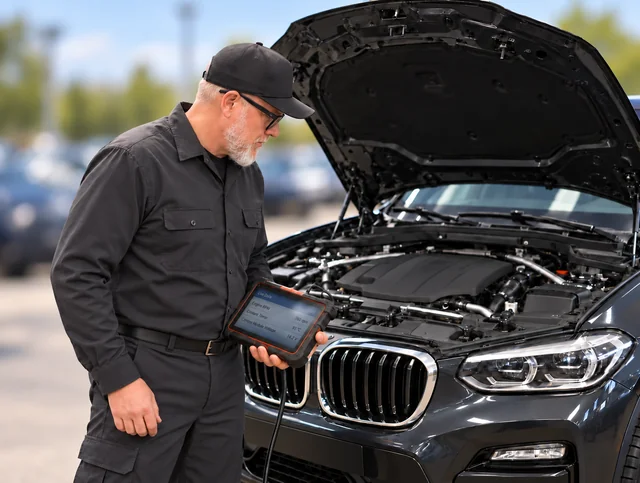
On this Model 3, the scan covered the electric drive, battery management, charging and safety systems. No fault codes came back in the systems scanned. A clear scan is a useful observation, and a mechanical problem can still be present with no codes stored.
Ask what was covered and keep the scan in context with the road test and physical checks. If the car has an intermittent complaint, collect the wording of the warning or a photo of the message. That can help you follow up even if the warning stays off during the visit.
Check the tread and wheels
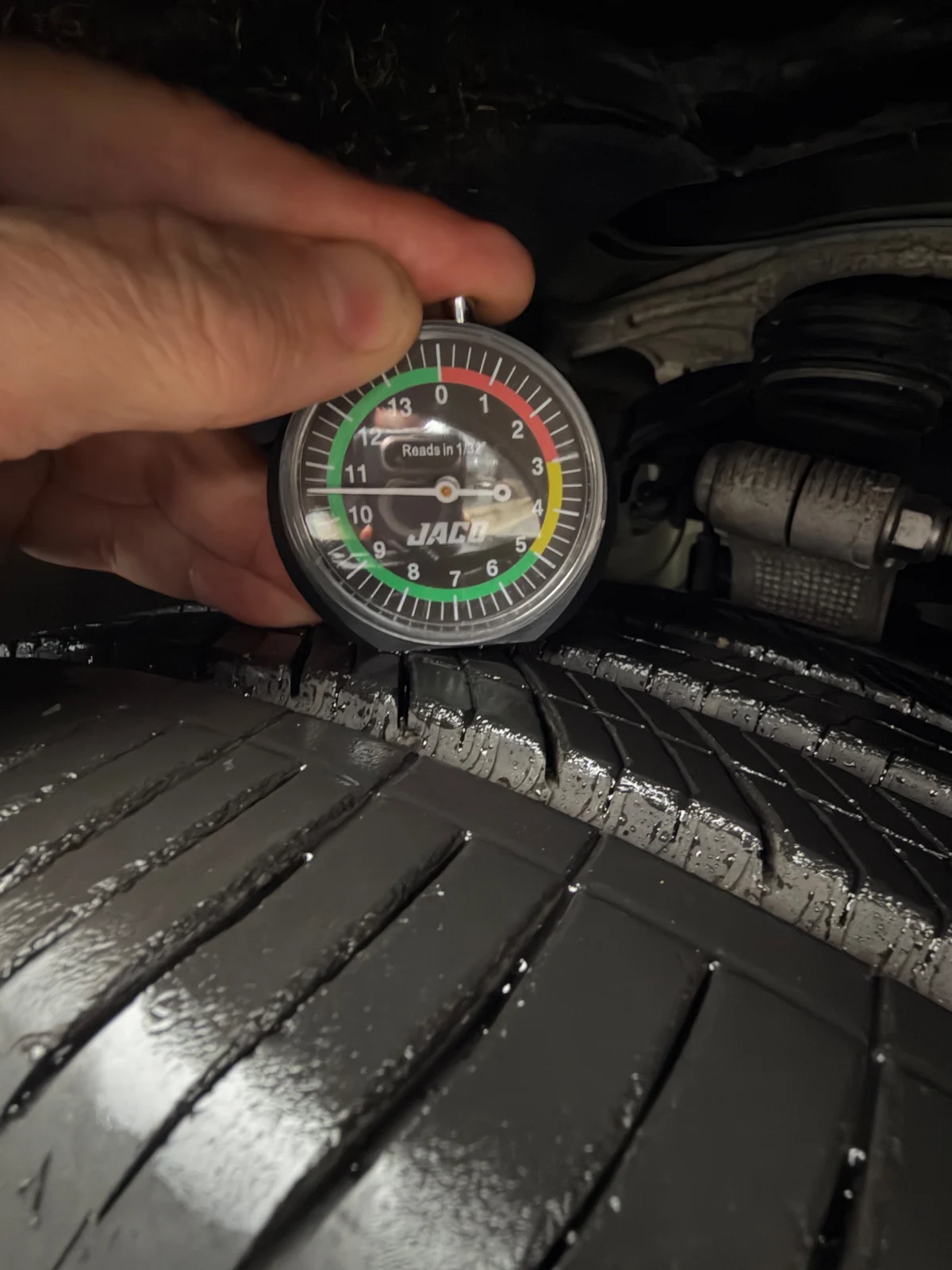
This Model 3’s tires measured 7/32 to 11/32 inch, and I recorded them in good shape. We check tire condition around the car and look for uneven wear, wheel damage and tread differences. The individual readings give you a clearer idea of what the car has today.
Look at the whole tire, including the shoulder where visible. A listing may say the tires are good based on a glance. We use the measurements and what I see across the tread. If there’s wear on one side, ask about tire replacement, alignment and any related suspension work.
Look at the condition of the bodywork
Compare finish and panel fit. Ask the seller about any repair records or before-and-after photos.
Find out what charging equipment is included
The Model 3 didn’t come with a portable charger. Before agreeing on a price, ask which cable, adapters or other charging equipment are included, and check whether those match how you plan to charge. The cost matters if you need to purchase something right away.
If the seller can demonstrate charging, ask which setup is available. A successful session shows the car charged on that equipment at that time. If the car has had charging warnings, ask for details about the equipment used and whether the seller had the problem diagnosed.
Ask the right question about battery health
we record the battery information I can access. The miles displayed on the touchscreen are a range estimate. It takes a separate assessment to establish high-voltage battery capacity. If remaining battery coverage matters, verify the terms for that VIN with the manufacturer.
Ask for repair or replacement records and see what information the seller has about charging and warning messages. If you want a specific test, tell me before you book. I can explain what my inspection covers and whether you’ll need additional testing.
Check what comes with the car before signing
Ask the seller to put the included equipment in the written deal. For the Model 3, I would start with key cards, any portable charging equipment and adapters. Ask the seller to show where those items are stored and demonstrate the ones you plan to use. If a piece is missing, you can find out what it costs and how soon you can get it before you commit.
Try the cabin controls, heat and A/C
we check the controls we can operate, along with heating and cooling. The Model 3’s heat and air conditioning both worked during the inspection. Check that the steering controls, windows, mirrors and basic touchscreen functions you’ll use respond normally.
When a feature depends on the seller’s account or subscriptions, ask what comes with this car and confirm the answer before paying. A photo of the screen can help identify exactly what the seller is advertising. See what we check on a used Tesla, then book a Tesla inspection at the seller.